
The Startup I Built Before I Had the Answer
I co-founded Wireframes, a way to get quick, affordable design advice from a real architect by chat. We applied to Y Combinator and drew interest from Antler Singapore. The lesson I kept is: do not fall for the first idea. Test the problem with real people, and let the evidence show you.
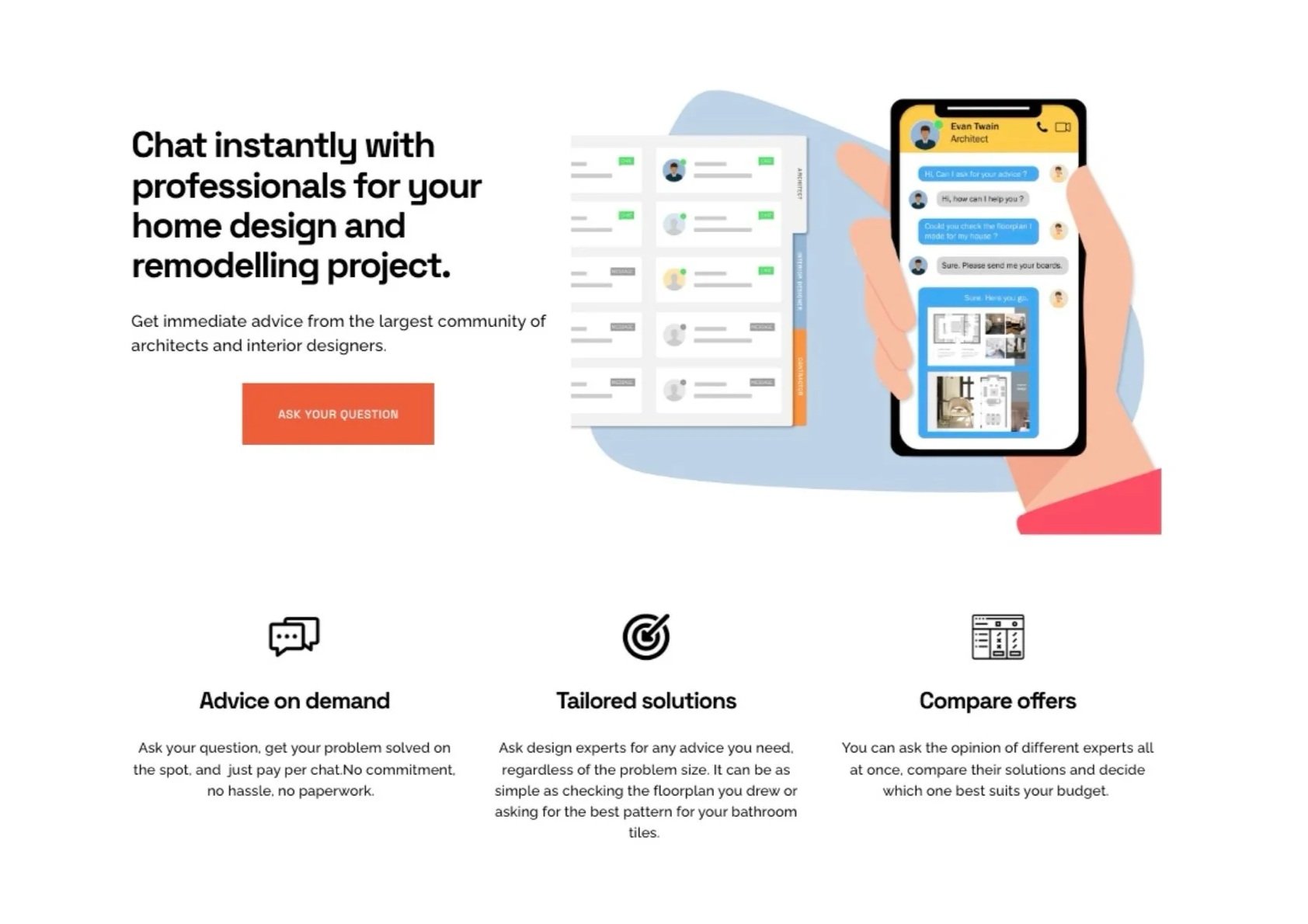
Wireframes, 2020. On-demand advice from a real architect or interior designer, for a single home-design decision.
The gap I saw
I trained and worked as an architect. And for years I noticed the same quiet thing. Most people who change their home never work with one of us. Around 80% of home projects happen without a designer.
It is not that they do not want good advice. Hiring an architect costs a lot, it is more than a small job needs, and it takes weeks. So people skip it. They draw the plan themselves and hand it straight to a contractor.
But many of them did not need the whole service. They needed one person who knew what they were doing to look at a floor plan, question an idea, or help them make a single decision.
That became the question behind Wireframes. Could good design advice become something a person could get on demand, the same day, for one small problem?
What we built
Wireframes connected homeowners with architects and interior designers over chat. Instead of hiring someone for a full project, you could bring one specific problem, talk directly to a professional, and pay for the time you used.
We also started shaping the tools around it. Shared design boards where people could drop drawings, photos, and references. And a simple floor plan tool built from architect-designed templates, so someone could try a layout by dragging blocks around instead of learning software.
The whole idea was to make showing a spatial problem almost as easy as sending a message.
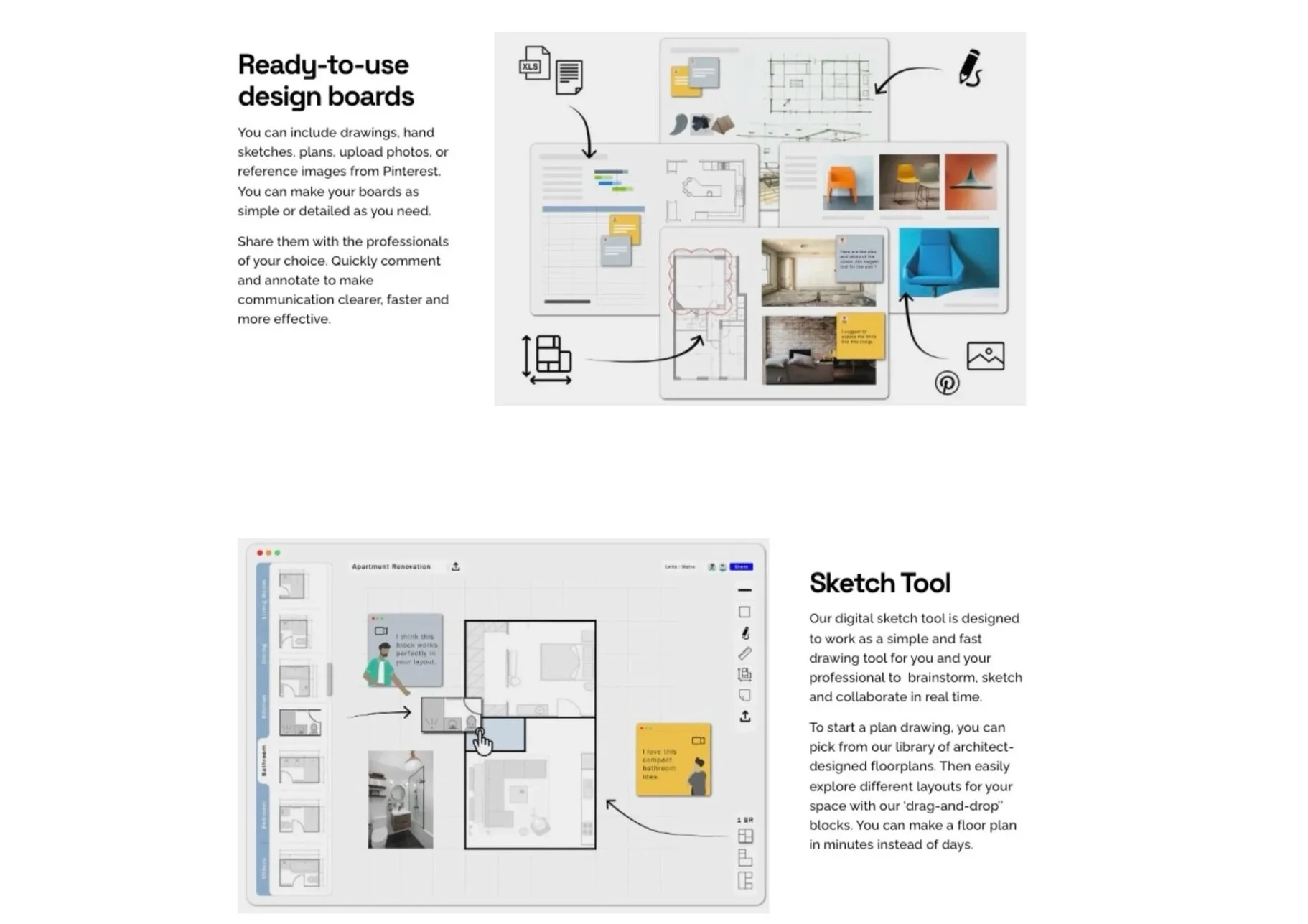
Early product concepts: shared design boards and a simple floorplan tool, built to make a spatial problem easy to show and discuss remotely.
How we tested it before building it
We did not start by building software. My co-founder and I became the first professionals ourselves. We ran the service by hand, using tools people already had like WhatsApp, and answered real questions from real people who paid us.
It was a small test, but the important one. Five customers paid in the first month, for around €1,000. Ten more told us they would pay too. We learned whether people wanted this before we spent a cent building it.
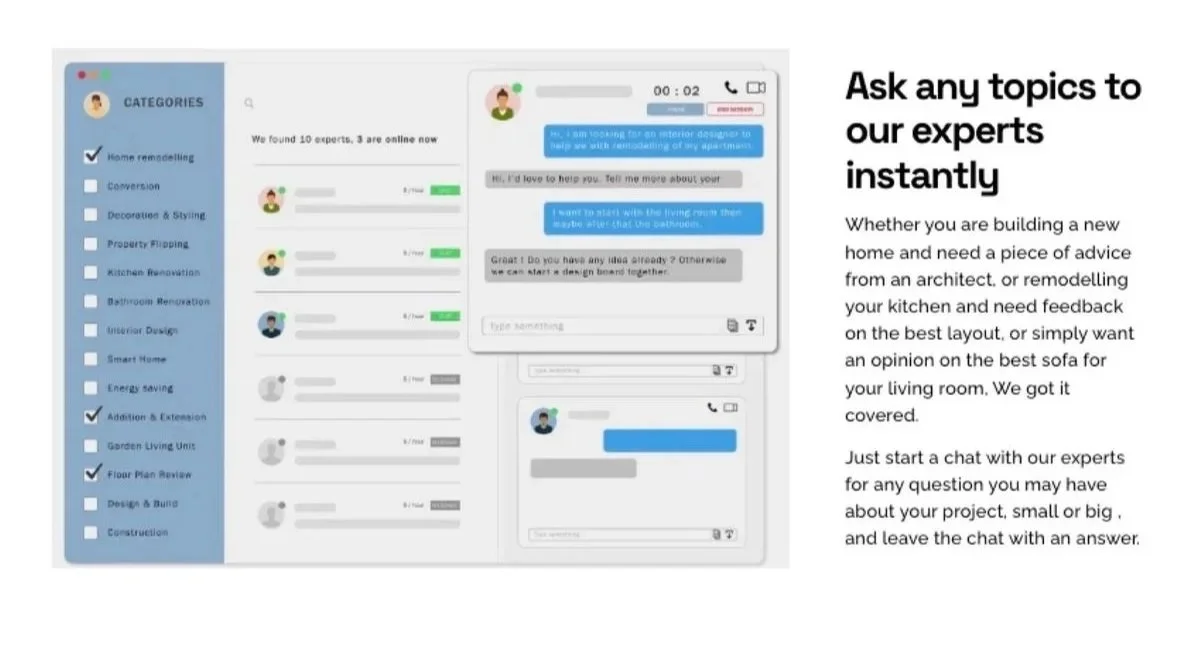
Marketplace concept, connecting with specific expert for consultation
The two pivots
Wireframes was not the first idea. It was the third. Each time, I let the evidence end the previous one instead of arguing for it.
First, micro-homes. We started with low-cost, easy-to-assemble small houses. What we learned: cheaper construction did not help when the land underneath still cost a fortune.
Then, a furniture wall. We tried a movable wall system that could make a small apartment feel twice the size. What we learned: making it, shipping it, and installing it would not scale at the price we wanted.
Then, advice. Underneath both, the same simpler need kept showing up. People wanted help with the home they already had. So we tested whether they would pay for direct access to a professional. They did.
What I took from it
Wireframes never became the large marketplace we pictured. But building it settled something in how I work.
The first idea is rarely the precious one. The problem is. We began with physical products, changed direction twice, tested the final version by hand, and only thought about building more once people had shown, with money, that they wanted it.
It taught me to tell the difference between what sounds like a good idea and what people actually need. And to use small, cheap experiments to find that line quickly, instead of guessing.
That way of working has stayed with me. Understand the real problem. Make the idea tangible fast. Put it in front of real people. Then let what they do, not what I hoped, decide the next move. It is how I approach any change now, whether it is a startup or the way an organisation learns to decide.
How we described it in 2020
“Slack for home design consulting.” “Canva for floorplans.”
How we tested it before building it
We did not start by building software. My co-founder and I became the first professionals ourselves. We ran the service by hand, using tools people already had like WhatsApp, and answered real questions from real people who paid us.
It was a small test, but the important one. Five customers paid in the first month, for around €1,000. Ten more told us they would pay too. We learned whether people wanted this before we spent a cent building it.
The two pivots
Wireframes was not the first idea. It was the third. Each time, I let the evidence end the previous one instead of arguing for it.
First, micro-homes. We started with low-cost, easy-to-assemble small houses. What we learned: cheaper construction did not help when the land underneath still cost a fortune.
Then, a furniture wall. We tried a movable wall system that could make a small apartment feel twice the size. What we learned: making it, shipping it, and installing it would not scale at the price we wanted.
Then, advice. Underneath both, the same simpler need kept showing up. People wanted help with the home they already had. So we tested whether they would pay for direct access to a professional. They did.
What I took from it
Wireframes never became the large marketplace we pictured. But building it settled something in how I work.
The first idea is rarely the precious one. The problem is. We began with physical products, changed direction twice, tested the final version by hand, and only thought about building more once people had shown, with money, that they wanted it.
It taught me to tell the difference between what sounds like a good idea and what people actually need. And to use small, cheap experiments to find that line quickly, instead of guessing.
That way of working has stayed with me. Understand the real problem. Make the idea tangible fast. Put it in front of real people. Then let what they do, not what I hoped, decide the next move. It is how I approach any change now, whether it is a startup or the way an organisation learns to decide.
