
This Is What I Am Building

This piece continues from the decision system designed in the previous experiment. The weeks of manual filtering, the fatigue that builds when volume meets judgment week after week, and what it took to turn the logic into something that could make the output consistent.
A few weeks ago, I wrote about designing a job search as a system rather than a manual search. The idea was simple: scanning through hundreds of roles is exhausting and mentally draining. The amount of information creates noise that clouds judgment. I believed that filtering the vacancies earlier would allow the energy to be spent on a few bets that are actually worth the attention.
That article was about making the logic, the phases, the scoring, a system that should work.
The gap between having logic and having a tool
In the beginning, the system worked. But as the weeks passed and more LinkedIn job emails came in, with multiple repeated roles across batches, it quickly became messy. I found myself re-evaluating jobs I had already passed on, and this time trying to convince myself that the company was prestigious enough, or that the position was close enough to what I was already aiming for.
That is the thing about decision fatigue. You just realize, at some point, that the standards you set for yourself are harder to keep. And the reason is the volume of jobs to filter, categorise, and decide on, week after week.
So I stopped doing it manually and started building an actual tool — a dashboard that holds the logic, applies the rules, and runs the filtering without depending on my focus at any given moment.
What does the build require first
Before any filtering could start, I needed something real to filter against.
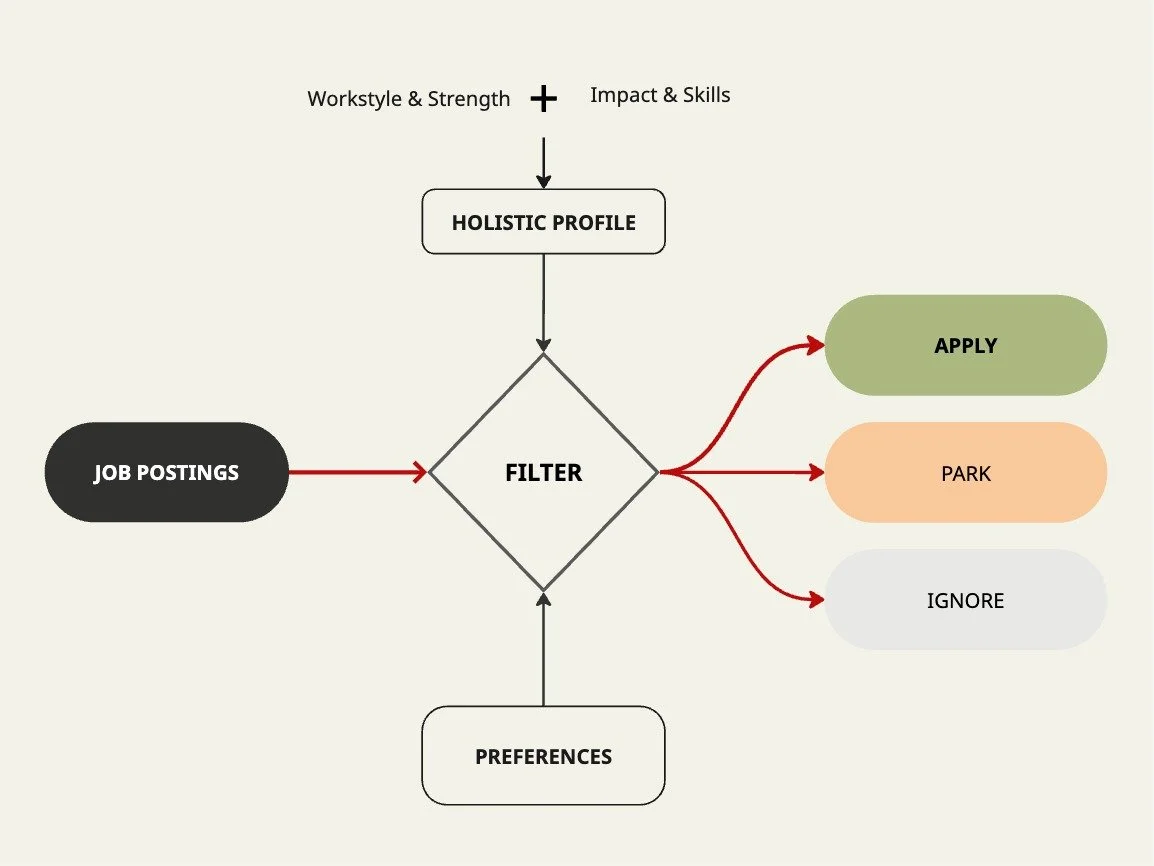
I pulled together everything I had. CVs from different phases of my career, professional personality assessments like the HBDI brain map, Clifton Strengths, and the Big Five, and written feedback from colleagues across different organisations. Together, they formed a body of evidence rather than separate documents.
The unexpected thing is that a pattern started to form. Characters like systems-oriented, energized by building from scratch and working in ambiguity. But it also showed what drains me: maintenance work, overly rigid environments, roles where the problem is already fully defined, and someone just needs to execute it. The creative aspect of my brain comes alive when the problem sits across functions, and no one quite owns it yet.
That holistic profile became the anchor. It is the base that the system evaluates every role against.

What I had not expected
I expected building the tool to make the filtering faster. What I had not expected was how much it forced me to be honest about what I was actually looking for.
When you have to write the rules down, decide what a hard stop is and what is a trade-off you would actually accept, you cannot stay vague. And vagueness is comfortable in a job search, because it keeps options open. A working system filters them out automatically, for reasons you have already thought through, rather than waiting until a role is in front of you and you start reconvincing yourself to open decisions that you already made.
The discomfort of doing that was useful. It showed me where I had been dishonest with myself by applying to roles I already knew were not quite right. It’s because committing to your directions, therefore narrower selections, felt riskier than staying open to all opportunities.
What it gave back
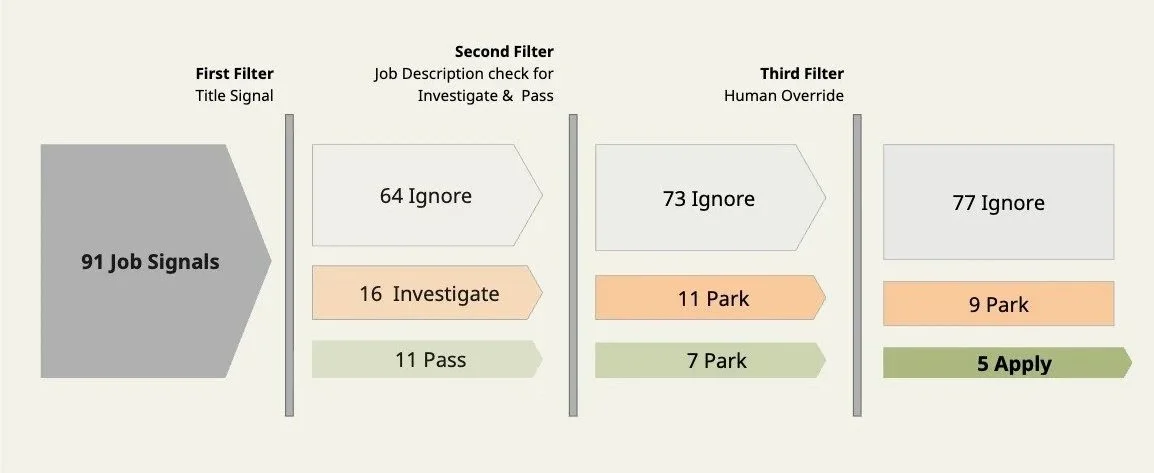
The first week I ran real data through the system, 91 roles came in from my LinkedIn alerts, and seventy-seven were filtered out.
Watching 77 roles disappear felt stranger than I expected. Suddenly, I could see how much time I had been spending on exactly that category of role before, the ones that were clearly not suitable. It was because some roles look acceptable on the surface, have a good company reputation, and would have sent me into a long re-evaluation that ended in the same place the system reached in seconds.
What came back, when that effort stopped going there, was my focus. A mindful focus that comes from having fewer things in front of you, and knowing why each one is there.
That is what I am building. A way of getting back the attention and effort where it will be needed the most.
This is the first piece in a short series about what the build revealed — about the market, and about the direction it helped me see more clearly.
